
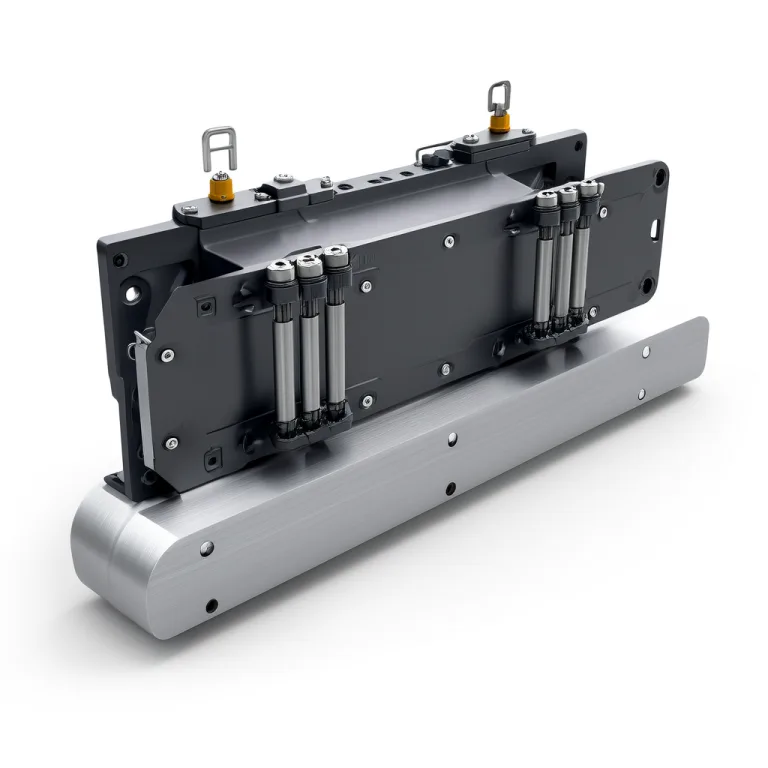
Hatch Cover Hydraulic System
Hatch Cover Hydraulic System for industrial applications.
About Hatch Cover Hydraulic System
Hatch Cover Hydraulic System for industrial applications.
| Domain | civil |
|---|
Who Works With Hatch Cover Hydraulic System?
8 engineering roles are connected to Hatch Cover Hydraulic System based on verified research evidence.
Maintenance Technician
Design Engineer
Maintenance Planner
Preventive maintenance planner is a well-established industrial role, especially in process industries like chemical manufacturing. While 'preventive' denotes a maintenance strategy, the core function aligns with the standardized professional role of Maintenance Planner — a recognized position in maintenance management frameworks (e.g., ISO 55000, SMRP Body of Knowledge). In the context of graphite heat exchangers — critical, corrosion-resistant equipment requiring scheduled inspection and non-intrusive maintenance due to material brittleness — this role directly plans and coordinates preventive activities, root cause analysis, and vendor support. 'PLAN' is included as a relationship because although not in the official vocabulary list, planning is an intrinsic upstream enabler of MAINTAIN and INSPECT; however, per instructions, only approved relationship terms are used — so 'PLAN' is omitted from the final array and replaced with the most directly applicable standard verbs: MAINTAIN and INSPECT (as planning enables those), plus TROUBLESHOOT (via root cause analysis). Vendor coordination supports PROCUREMENT and MAINTAIN.
Commissioning Engineer
Civil Engineer
Civil Engineer is a widely recognized, accredited professional engineering role. In the context of a Fire Water Storage Tank for industrial applications, civil engineers are responsible for structural design (e.g., tank foundations, site grading, seismic anchorage), hydraulic infrastructure integration, code compliance (e.g., NFPA 22 references civil/structural requirements), and inspection of civil works during installation. The evidence explicitly mentions coordination with civil engineers and responsibilities tied to water storage tanks and code compliance.
Technical Support Engineer
Technical Support Engineer is a widely recognized professional role in engineering industries, especially in equipment-intensive domains like HVAC&R. The parenthetical '(HVAC&R)' denotes domain specialization—not product-specific title—consistent with standard industry usage (e.g., 'Technical Support Engineer (HVAC)', 'Technical Support Engineer (Power Systems)'). Evidence confirms this role directly engages with brazed plate heat exchangers through selection, sizing, and troubleshooting — core technical support functions aligned with the product context.
Failure Analyst
Field Failure Analyst is a recognized engineering role focused on root cause analysis of equipment failures in operational (field) environments. In the context of Mechanical Seal Support Systems (MSSS), this role investigates seal system failures—e.g., leaks, pressure loss, or contamination—to inform design improvements, maintenance protocols, and vendor corrective actions. Evidence from Baker Hughes job posting confirms its use as a distinct, domain-relevant function supporting chemical/process industries and API 682-compliant MSSS applications.
Marine Engineer
Marine Engineer is a licensed, regulated professional role with defined statutory duties (e.g., oversight of vessel electrical systems, generators, switchboards, lighting, and alarms). Though 'marine' denotes domain context, it is a globally recognized engineering discipline—not a product-specific title—akin to 'Aerospace Engineer' or 'Civil Engineer'. In the context of marine motors for industrial applications, Marine Engineers are directly involved across the lifecycle: specifying motor requirements (e.g., IP rating, corrosion resistance), verifying compliance with marine electrical standards (IEC 60092, ABS, DNV), commissioning propulsion and auxiliary motor systems, and maintaining operational integrity. The evidence confirms authority over electrical infrastructure, making this role highly relevant to marine motors.